






By Nokwanda Ncwane
President Cyril Ramaphosa says the impact of migration on the Southern African Development Community (SADC) region was discussed behind closed doors during the bloc’s 46th Ordinary Summit in Durban.
Heads of state and government from SADC’s 16 member states gathered at the Inkosi Albert Luthuli International Convention Centre (Durban ICC) on Monday, 17 August, for the annual summit, with South Africa assuming the chair of the regional bloc for 2026/27.
Delivering his closing address, Ramaphosa said regional leaders had “expressed regret for what has befallen us as a country” in relation to the migration challenges facing South Africa.
“We express a wish that we should all work together to address the challenge of migration. There was recognition that the challenge of migration is complex, is not easy and there was also an expression for the need for cohesion in our region and the need for unity as we address this challenge,” Ramaphosa said.
Ramaphosa has previously called on SADC countries to address the root causes of migration, while stressing that movement within the region should take place in accordance with established laws, protocols and principles.
The issue is particularly significant for South Africa, which has experienced growing political and public pressure over undocumented migration in recent months.
For more than a year, campaigns calling for stricter immigration enforcement have intensified. While organisations such as March and March say their focus is on undocumented foreign nationals rather than foreign nationals generally, the protests have raised concerns about xenophobia, vigilantism and the safety of migrants and refugees.
The issue intensified in the lead-up to and following the 30 June national shutdown, which was driven in part by demands for undocumented foreign nationals to leave the country.
In Durban, hundreds of Malawian nationals also became stranded at temporary sites after seeking assistance to return home. The eThekwini Municipality previously said more than 20 000 Malawian nationals had been processed and repatriated through temporary sites in the city, while the official temporary repatriation centre was subsequently moved to Musina in Limpopo.
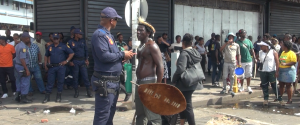
Against this backdrop, the March and March Movement staged a demonstration in Durban on Monday while SADC leaders were meeting at the ICC.
The group, led by founder Jacinta Ngobese-Zuma, marched from Durban City Hall towards Gugu Dlamini Park, which is situated opposite the ICC, demanding that SADC leaders address the ongoing illegal immigration crisis.
Protesters carried placards reading “Fetch your people” and “South Africa is not a dumpsite”.
The group handed over a memorandum to KwaZulu-Natal Acting Police Commissioner Major-General Phumelele Makoba and a representative from the office of KwaZulu-Natal Premier Thami Ntuli.
During her address, Ngobese-Zuma criticised the heavy police presence around the summit and called on law enforcement to assist with the deportation of undocumented foreign nationals.
“The President can send out so much police for the SADC Summit! We understand that there are heads of state from other countries and this is good but we urge these police to assist with deportations of illegal immigrants,” she said.
The demonstration came as South Africa sought to use its year-long leadership of SADC to strengthen regional cooperation, including on migration, trade and regional integration.
South Africa has also been pushing SADC member states to advance a stalled protocol on the movement of people, which seeks to establish a framework for regulating the movement and residence of citizens within the region.
The migration debate has also placed pressure on relations between South Africa and neighbouring countries, particularly as the country has stepped up immigration enforcement and faced criticism over the treatment of undocumented migrants.
The government has repeatedly maintained that immigration laws must be enforced, while also warning against vigilantism, xenophobia and attacks on foreign nationals.
The scale of the government’s response to the protests has also come under scrutiny.
Ahead of the 30 June demonstrations, Acting Police Minister Firoz Cachalia announced that R600 million had been redirected from the South African Police Service budget to strengthen operational readiness and security deployments. The funds were intended to prevent violence, protect critical infrastructure and avoid a repeat of the July 2021 unrest.
The allocation sparked debate, with critics questioning the amount spent on policing the demonstrations and calling for greater transparency over how the money was used.
Ngobese-Zuma said March and March would continue its campaign despite the size of the crowds attending its demonstrations.
She said the movement would continue to “march and march” until it achieved its objectives, even if only a small number of people participated, arguing that the organisation wanted to ensure that its concerns about undocumented immigration reached both government and the public.


