


By Nokwanda Ncwane
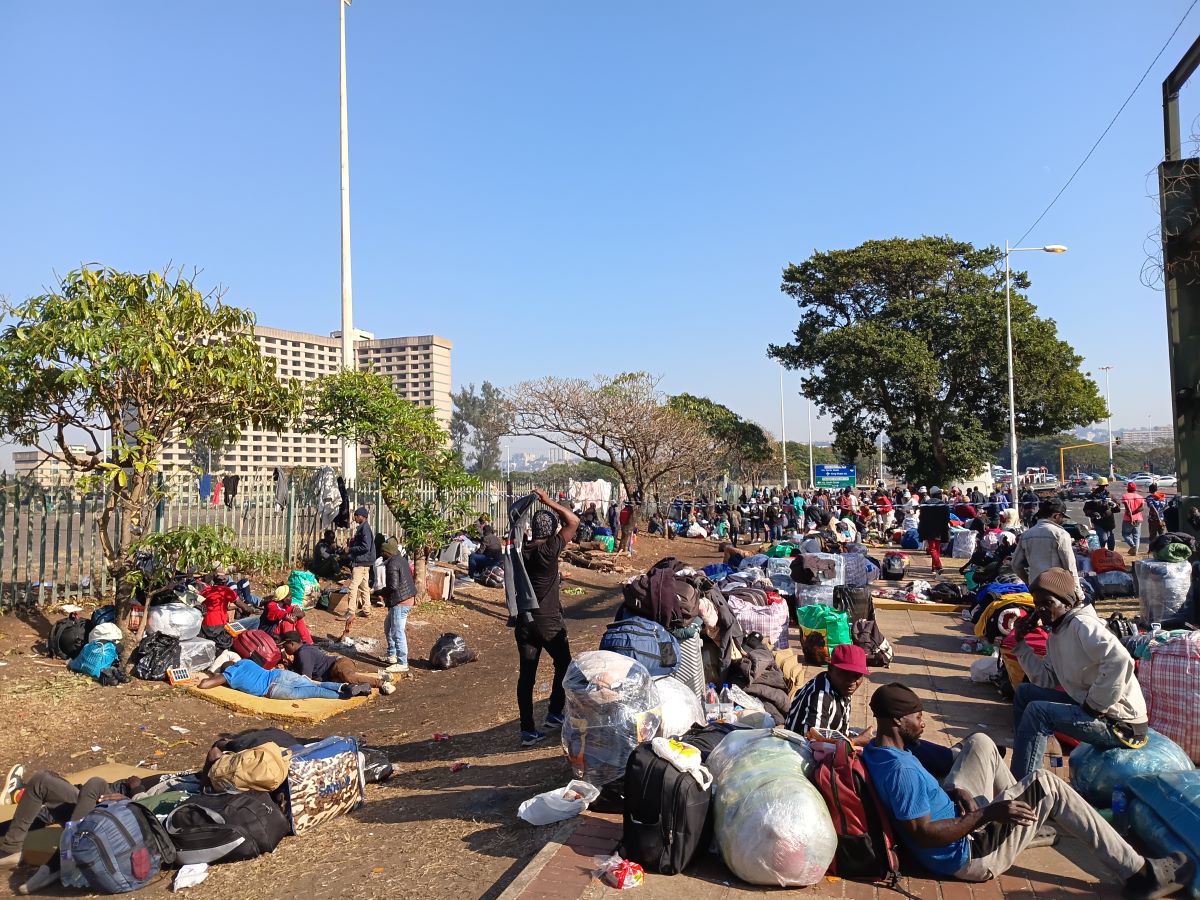
Despite the permanent closure of the Old Drive-In site in Durban, hundreds of Malawian nationals remain camped outside, hoping they will be transported to Musina in Limpopo before returning to their homes in Malawi.
The site, which officially closed last Tuesday, had been operating as a temporary processing centre for Malawian nationals volunteering to return home. The official temporary repatriation centre is now in Musina, Limpopo where around 37 000 migrants have been processed.
According to the eThekwini Municipality, more than 20 000 Malawian nationals were processed and repatriated through the Sherwood and Old Drive-In sites. The municipality said the final three buses departed last Thursday, marking the end of operations at the facility.
Despite the closure, dozens of migrants, including nationals from Malawi, Zimbabwe and Mozambique, continue to camp outside the site in the hope of securing transport. Most are men, although women and young children, including infants, are also among those waiting.
Closure of the site has seen the removal of services, like electricity, ablution facilities, electricity, adequate shelter and food stations. Many say they have little or no food and clean drinking water, although members of the public and humanitarian organisations have periodically delivered food and other essentials.
One Malawian national, who has been at the site since Saturday, said the harsh conditions had not diminished his determination to return home.
“We are still waiting for the buses to take us home. We have no other option. We just want to go home,” he said.
Another Malawian national, Wasiri Lajab, said he came to South Africa three years ago in search of employment. However, as anti-illegal immigration protests intensified in parts of the country, he said he lost both his job and accommodation after being asked to leave by his employer and landlord.
Lajab said that despite the official closure of the processing site, buses have continued to collect some Malawian nationals, with women and children reportedly being prioritised.
He also alleged that some individuals had approached stranded migrants demanding payment of R1,500 in exchange for transport home.
“Some people came and asked us to pay R1,500 if we were serious about going home, but some of our friends went home without paying anything. We are still hopeful because Gift of the Givers promised us that buses will come and take us home,” he said.
The allegation that money is being demanded for transport could not be independently verified.
Lajab appealed to the Malawian government to assist citizens who remain stranded in Durban.
“We ask our government to help repatriate us. Some people were left behind because they were still working and their employers had promised to transport them at the end of the month. Now they have also been left stranded,” he said.
The continued presence of stranded migrants outside the now-closed facility highlights the humanitarian challenges that remain after the official repatriation programme has concluded. With limited access to basic services and looming uncertainty over when additional transport will be made available, many say they have little choice but to continue waiting in the hope that they will soon be able to return home.
