


By Nokwanda Ncwane
Following the highly anticipated 30 June shutdown, March and March leader Jacinta Ngobese-Zuma says the organisation will continue protesting every Thursday for as long as illegal immigration remains an issue in South Africa.
Ngobese-Zuma made the remarks while addressing hundreds of supporters who participated in the Durban leg of the march, which started at King Dinuzulu Park and proceeded to the Point Police Station in South Beach, an area widely associated with drug-related activity.
During her address, Ngobese-Zuma said she hoped the South African government had another R600 million available to deploy law enforcement officers, referring to reports that approximately R600 million was spent on security operations during the 30 June shutdown. The reported figure sparked debate among citizens, with some arguing that the money could have been allocated to other pressing needs.
“For as long as we still have areas such as the Point where drugs are being sold in broad daylight as if they are selling sweets on the streets, we will continue to march,” she said.
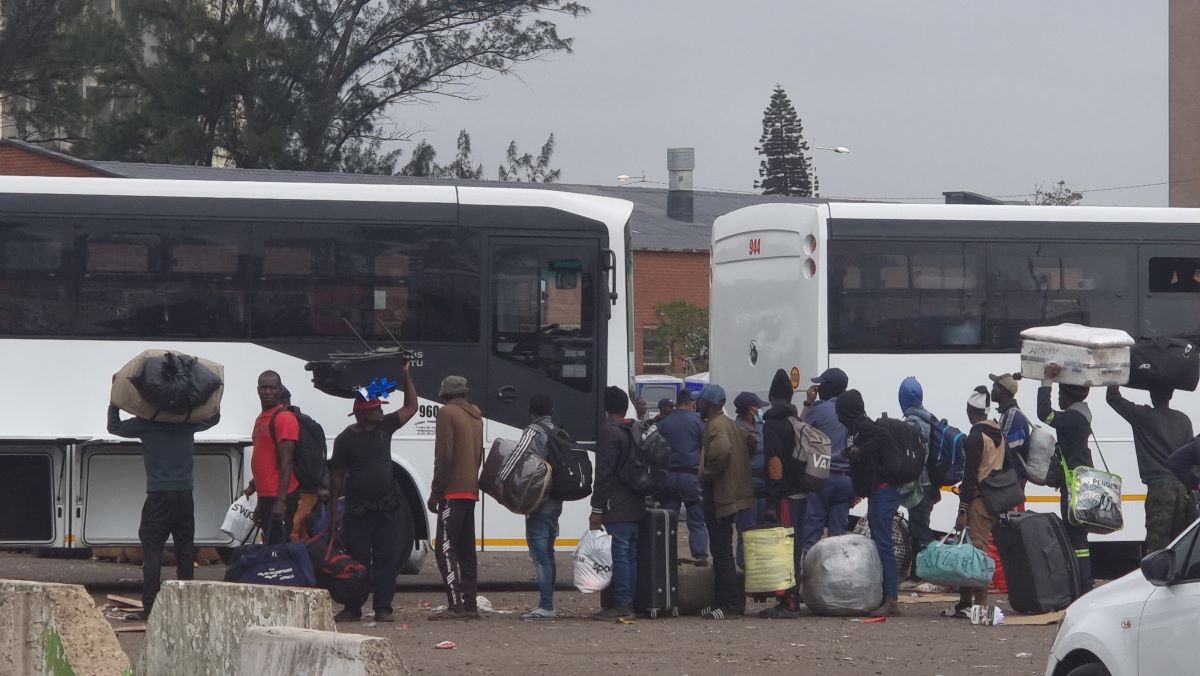
Meanwhile, on Thursday, eThekwini Mayor Councillor Cyril Xaba oversaw the clean-up of the former Drive-In site following its official closure after it had served as a temporary processing centre for Malawian nationals.
According to the eThekwini Municipality, more than 20,000 Malawian nationals were processed and repatriated through the Sherwood and Drive-In sites, with the final three buses departing on Thursday.
“We made a commitment to the residents and business community in this area that the site would be closed within 14 days, and indeed we have honoured that commitment. eThekwini is a tourism destination, and we are pleased that work is underway to clear the site so that it can return to its normal state,” said Xaba.

While several politicians and humanitarian organisations have raised concerns about the anti-illegal immigration protests, some informal business owners say they are already experiencing a positive impact.
One salon owner in the Durban CBD, who requested anonymity, said the ongoing protests have resulted in more customers visiting her business. She said the hairdressing industry has long been highly competitive, with South African salon owners competing against foreign nationals who often charged lower prices.
“They used to do hairstyles at a cheaper rate, but now we’ll be able to charge normal prices from R250 upwards. They also used fake products, including relaxers and treatment products, which is why they could charge less. However, now that they are gone, business is starting to boom,” she said.
A South African barber also said business has begun improving as customer numbers increase.
“They were charging R50 for haircuts and for example, R150 for both eyelashes and installations, whereas the normal prices are much higher than that,” he said.
