


By Andiswa Buthelezi
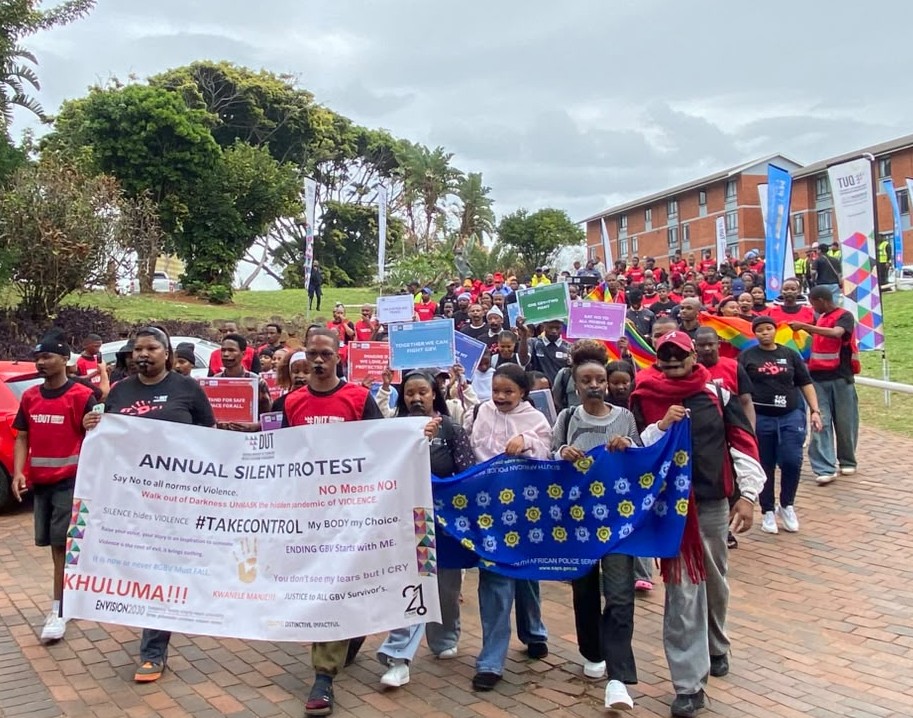
Durban University of Technology (DUT) hosted its 12th annual silent protest against gender-based violence (GBV) and HIV/AIDS at the Fred Crookes Sport Centre on 26 August.
The event, organised by DUT’s Department of Student Counselling, Health and HIV/AIDS Centre, brought together students, university staff and community organisations to raise awareness about gender-based violence, HIV/AIDS and other challenges affecting young people.
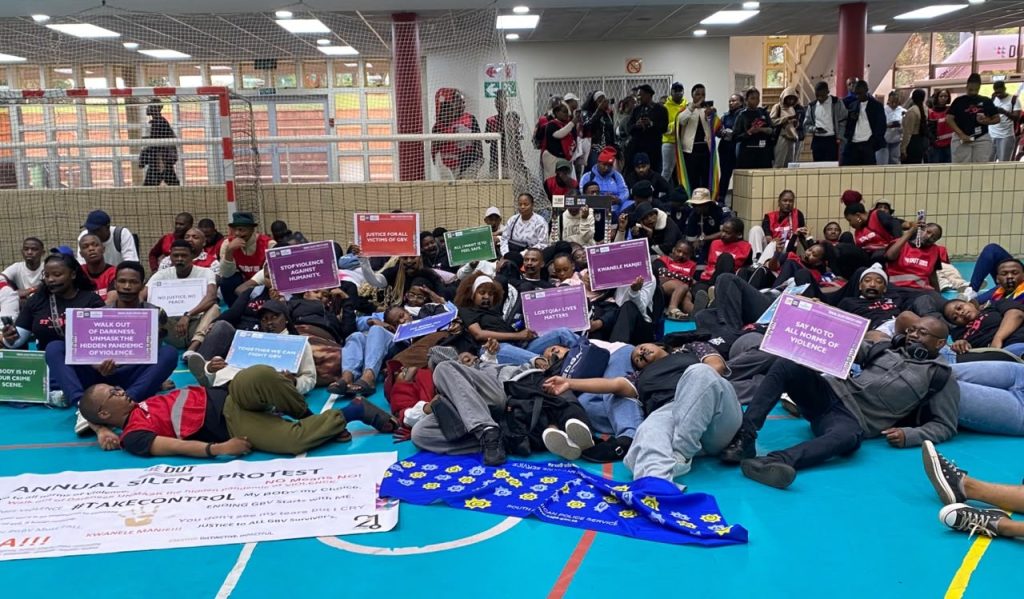
The programme began with a symbolic silent walk and “die-in” demonstration. Students observed a moment of silence to honour victims of gender-based violence and people whose lives have been affected by HIV/AIDS.
The demonstration highlighted the impact of violence and stigma and the importance of creating spaces where students can speak openly and access support.
Director of Student Counselling and Development, Zanele Mjadu, said DUT remained committed to creating a safe environment where students could seek help when dealing with rape, violence and other challenges.
“This annual silent protest reminds us that we all have a responsibility to stand against violence, discrimination and stigma. Universities must remain spaces where every student feels safe, respected and supported,” said Mjadu.
The event also gave students an opportunity to engage with organisations that provide support to victims and survivors of violence.
Representatives from the South African Police Service (SAPS), DUT Protection Services, the Department of Social Development, Student Counselling, the DUT Legal Office and community organisations took part in discussions on preventing violence, reporting cases and accessing support.
During the discussions, students raised concerns about reporting abuse, particularly when perpetrators are known to them or are part of their communities.
SAPS representative Nokwanda Biyela encouraged students to use the support structures available to them and not allow fear to prevent them from reporting abuse.
“Breaking the silence is often the first step towards justice. We encourage students to report cases and make use of the support structures available both on and off campus,” said Biyela.
Director of the International Centre of Non-Violence, Prof Ndumiso Ngidi, said addressing gender-based violence required cooperation between different sectors of society.
“Ending gender-based violence cannot be achieved by one sector alone. It requires ongoing conversations, educating each other and partnerships that empower young people to become part of the solution,” said Ngidi.
The event ended with a call for students and community members to speak out against gender-based violence, challenge discrimination and make use of support services when needed.
The annual protest continues to provide a platform for the DUT community to remember victims, raise awareness and encourage conversations around safety and well-being on and beyond campus.
