


By Sphelele Maqiti
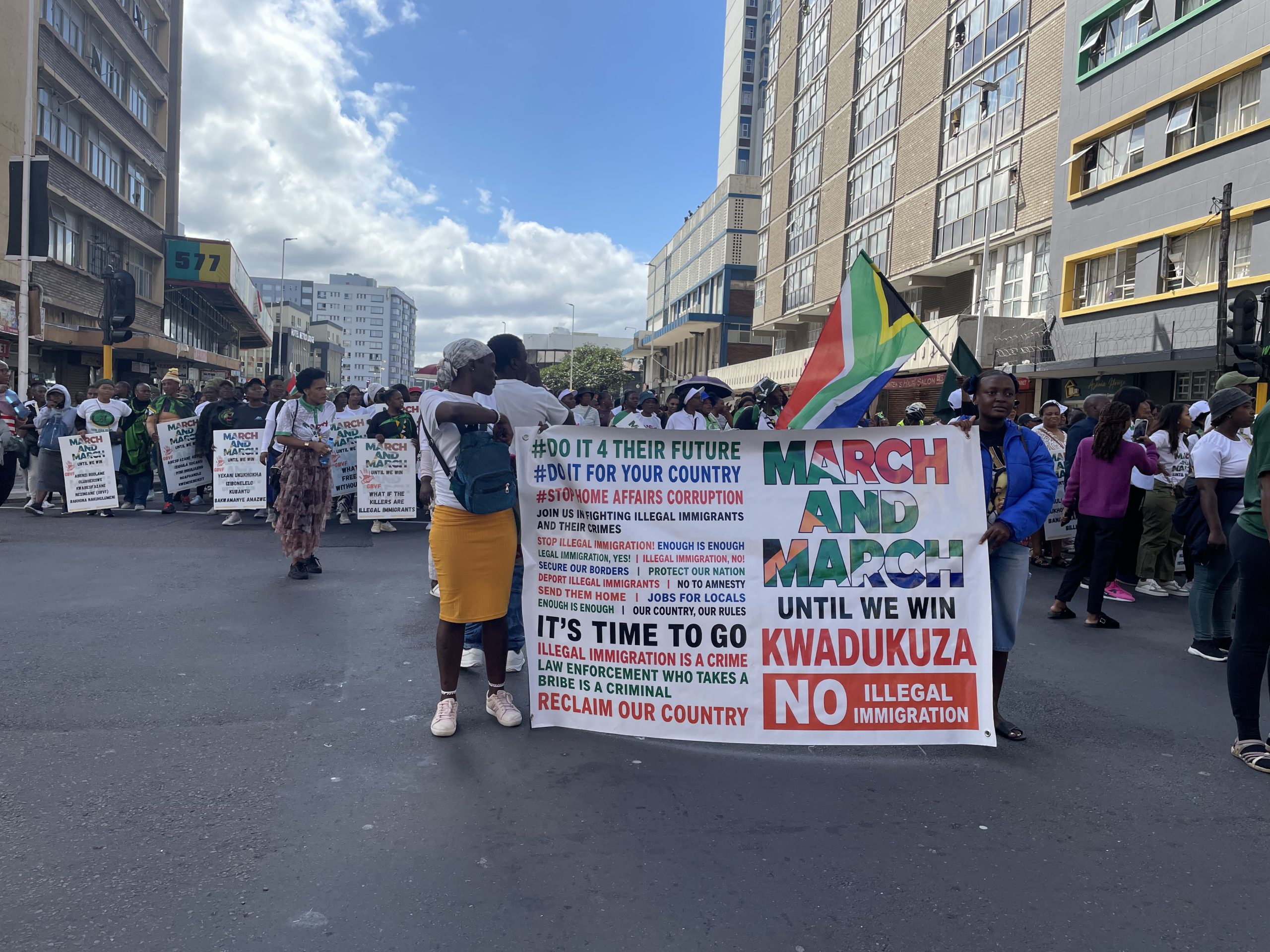
The March and March movement took to the streets of Durban on Wednesday, 30 September, to protest against gender-based violence (GBV) and femicide.
The group marched from Albert Park to Durban Point, calling for an end to violence against women and encouraging men to take a leading role in the fight against GBV.
The march comes amid growing concern over femicide in South Africa following the discovery of at least nine bodies in Kempton Park and surrounding areas in Ekurhuleni, Gauteng.
It also comes as calls continue for stronger action to address gender-based violence and femicide in South Africa. President Cyril Ramaphosa addressed the nation on Tuesday, 29 September, announcing measures aimed at tackling unresolved GBV cases, forensic backlogs, unsafe public spaces and alcohol-related violence.
Beginning at Albert Park, demonstrators proceeded towards Durban Point, with organisers encouraging men to take a leading role in speaking out against violence against women.
Women also joined the march in numbers, while organisers placed emphasis on the role of men in challenging gender-based violence and taking responsibility for creating safer communities.
March and March founder and leader Jacinta Ngobese-Zuma was among the key speakers who addressed the crowd at Durban Point.
Ngobese-Zuma criticised the government for what she described as not doing enough to protect South Africans. She said the 30 September march was focused on raising awareness about violence against women.
“People came to the march to bring awareness to gender-based violence and the killing of women,” said Ngobese-Zuma.
Umkhonto Wesizwe Party youth spokesperson Thabiso Thamsanqa Shembe explained the connection between the movement’s stance on illegal immigration and its campaign against gender-based violence.
“It’s not necessarily about saying that illegal immigrants are the main perpetrators of GBV. The connection comes in when undocumented foreign nationals commit these crimes and they are not arrested because it is difficult to trace them through things like DNA and fingerprints because they are not documented,” said Shembe.
One of the participants, Ofentse Rahulani, said the movement was about more than protesting against undocumented immigration.
“March and March is not only about marching against illegal immigration, that is a misconception. This is about fighting for the rights of South African citizens and that’s what we’re doing here today, marching for the rights of South African women,” said Rahulani.
Another protester, Philile Khoza, said recent killings in Johannesburg had prompted the group to take action.
“We are seeing what is happening in Johannesburg and we want to take action before it even happens here in Durban,” said Khoza.
The Durban demonstration was one of two marches held by the movement on Wednesday, with the other taking place in Pretoria.
The march comes against the backdrop of continued calls for stronger action to address gender-based violence and femicide in South Africa.
Organisers are urging communities, particularly men, to play an active role in challenging violence against women and creating safer communities.
