



By Nokwanda Ncwane
Hung councils, unpassed budgets, frequent changes in mayoral committee members and motions of no confidence have become common features of coalition governments in South Africa.
As the country prepares for the 4 November local government elections, voters face an important question: will fragmented political representation strengthen democracy or create further instability that undermines service delivery?
A hung council occurs when no political party wins more than 50% of the seats in a municipal council, making a coalition or minority government necessary.
Coalition governments are not new in South Africa. They date back to the 1994 democratic administration, when the African National Congress (ANC) formed a power-sharing government with the National Party and the Inkatha Freedom Party. At local government level, coalitions became increasingly prominent after the 2016 and 2021 elections, particularly in Johannesburg, Tshwane and Nelson Mandela Bay.
Research by the Dullah Omar Institute highlights the challenges associated with coalition governance, including narrow majorities, ideological differences, leadership changes and competition for executive positions.
These dynamics can disrupt municipal administration, delay budget approvals and interrupt long-term development plans.
Johannesburg, which has had 10 mayors since the 2016 local government elections, illustrates the instability. Smaller parties have played influential roles despite receiving relatively few votes. Al Jama-ah’s Thapelo Amad and Kabelo Gwamanda both served as Johannesburg mayor, while the African Independent Congress’s Margaret Arnolds became council speaker.
In eThekwini, the two-seat Abantu Batho Congress, led by Philani Mavundla, helped the ANC retain control of the municipality after the 2021 elections. Mavundla was appointed deputy mayor before relations between the parties deteriorated.
According to the Independent Electoral Commission (IEC), 620 political parties were registered for the upcoming elections, up from 508 reported in July. While the increase reflects political participation, it could also contribute to fragmented councils and difficult coalition negotiations.
Coalitions can broaden representation and prevent one party from exercising unchecked power. However, their success depends on transparent agreements, political cooperation and a commitment to service delivery.
Can legislation stabilise coalitions?
Parliament has been considering the Municipal Structures Amendment Bill, also known as the Coalitions Bill, to establish a clearer framework for coalition governments. As of August 2026, the Bill was still being processed, and it remained uncertain whether it would become law before the elections.
According to Parliament, the proposed legislation aims to promote stable and accountable coalitions, reduce political instability and protect service delivery.
Measures include clearer coalition agreements and restrictions on repeated motions of no confidence against municipal office-bearers. A 2025 version of the Bill proposed limiting such motions to once in a 12-month period, subject to exceptions for serious circumstances.
The South African Local Government Association (Salga) has also called for clear, publicly available coalition agreements outlining shared policy programmes, the allocation of responsibilities, decision-making processes and dispute-resolution mechanisms.
Salga spokesperson Motalatale Modiba said poorly managed transitions and fragile agreements could delay decisions, weaken oversight and place basic services under strain.
He added that coalition agreements should be legally binding to promote stability and sustained service delivery.
The proposed legislation seeks to address a central challenge: preserving the democratic benefits of coalitions while preventing political bargaining from paralysing municipalities.
Identity politics and immigration shape campaigns
Beyond coalition instability, identity politics and immigration are also likely to influence voting patterns.
During the 2024 general elections, the uMkhonto weSizwe (MK) Party received 45% of the vote in KwaZulu-Natal, becoming the province’s largest party and displacing the ANC. The province is now governed by a coalition involving the ANC, IFP, DA and NFP.
The result prompted debate about the role of ethnic and regional identity in voting. Former DA federal council chairperson Helen Zille argued that some voters prioritised identity over party policies and governance records.
However, voting decisions are influenced by several factors, including service delivery, leadership, political ideology, local candidates and residents’ experiences.
For local government, these issues are particularly important because municipalities are responsible for essential services such as water, electricity, sanitation, refuse collection and road maintenance.
Durban resident Nomzamo Zwane, 25, said political instability and poor service delivery had affected her confidence in local government. She expressed a preference for a majority government, although she acknowledged that coalitions could keep parties accountable.
Her views reflect the dilemma facing voters: coalitions can prevent unchecked power, but unstable arrangements can make effective governance difficult.
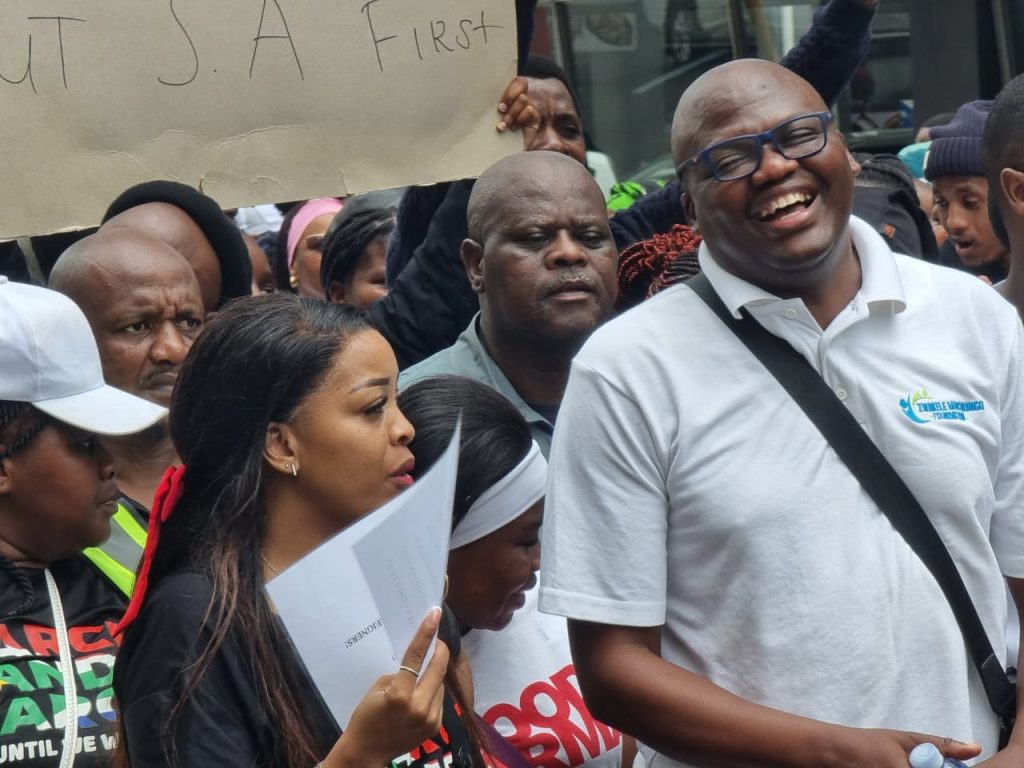
Immigration has also become a prominent campaign issue. The MK Party and ActionSA have supported demonstrations organised by anti-illegal immigration group March and March, founded by Jacinta Ngobese-Zuma.
The Patriotic Alliance, led by Gayton McKenzie, also campaigned strongly on immigration during the 2024 elections through its #Abahambe campaign and calls to prioritise South Africans. The party’s performance demonstrated the electoral potential of the issue, prompting other parties to speak more openly about immigration enforcement.
However, voters must consider whether campaign promises translate into practical solutions for unemployment, service delivery and other municipal challenges.
Voter education remains essential
With more than 600 political parties registered for the elections, voters face a wide range of choices. The challenge will be ensuring that the councils elected on 4 November can govern effectively and prioritise residents’ needs.
Political parties and candidates should be judged not only on their manifestos but also on their governance records, accountability and ability to deliver basic services.
The IEC, political parties and civil society also have an important role in educating voters about local government, elections and the responsibilities of elected representatives.
Ultimately, coalitions are not necessarily the problem. Their effectiveness depends on whether parties can work together around shared priorities rather than political positions and personal interests.
The 2026 local government elections provide an opportunity for residents to choose representatives who can build stable, accountable and responsive municipalities. Beyond political loyalty and identity, voters must consider which parties and candidates can deliver meaningful improvements in their communities.
