


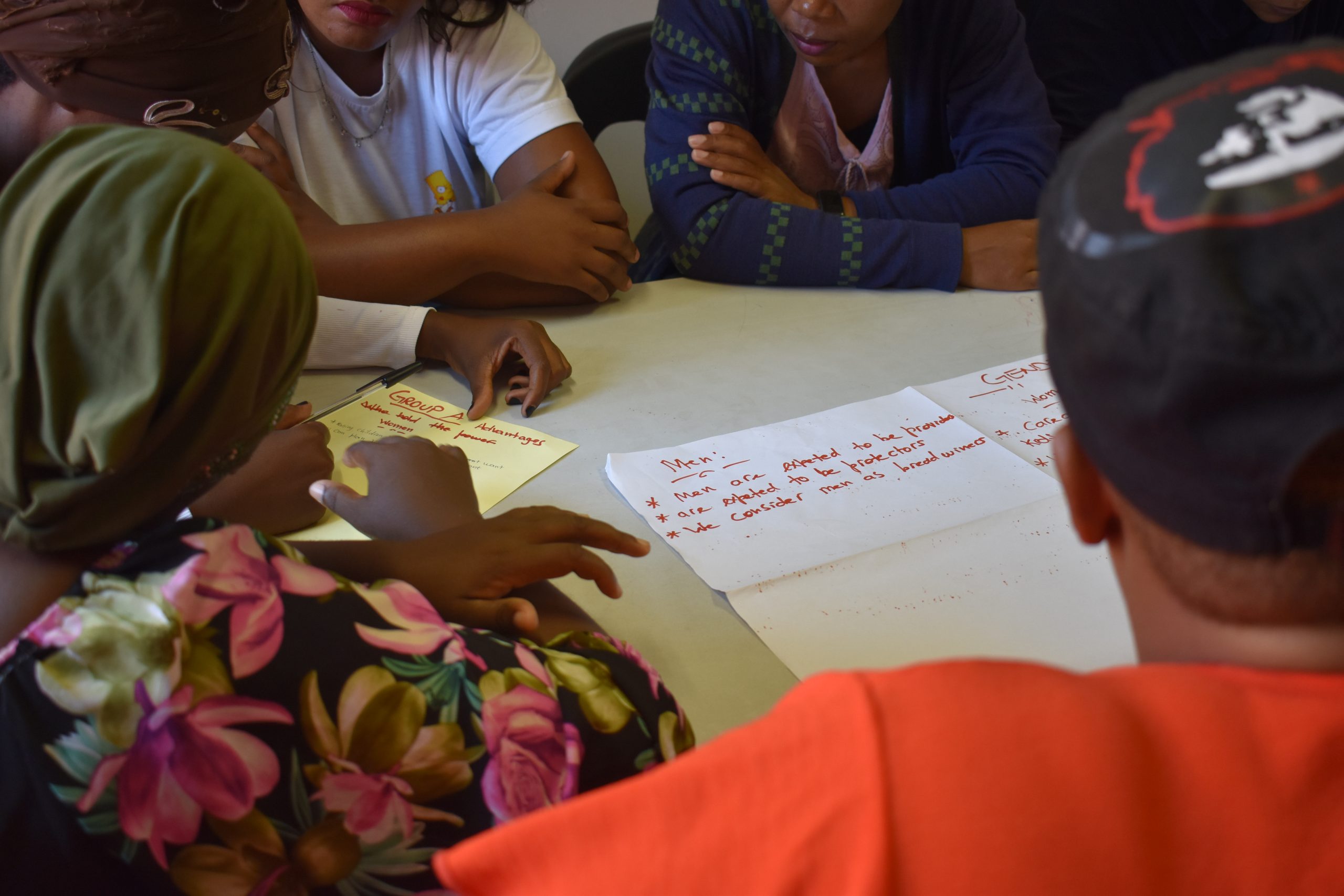
By Sompisi Ntuli
The bustling streets of Durban have become a contested terrain where South Africans and
foreigners coexist daily. These individuals, despite different nationalities and origins, use the
same public services and trade at the same markets.
Despite this cohesion, immigration remains an intensely debated topic in the southernmost
part of the African continent. The South African Social Attitudes Survey (SASAS), released by the Human Sciences Research Council (HSRC), which has been conducted and published annually since 2003,
saw a share of the public expressing their disapproval towards immigration, rise to an all-time
high of 42% in 2025.
The findings from the HSRC point to shifting public attitudes towards immigration. This
evident in the research council’s findings that revealed that the percentage of adults who were
accepting of immigrants reached an all-time low of 15% in 2025, opposed to the 41% who
expressed acceptance of some immigrants, while 2% were uncertain. These figures, which are the latest, point to a 10% increase since the data began being collected 23 years ago.
Why has the acceptance of immigrants in South Africa dropped so drastically? The answer to this question varies, but for some the answer lies in the underlying economic and social issues that continue to plague a country in the 32nd year of its democratic dispensation.
Look Beyond Immigration
As far as Asenathi Makanya, a 23-year-old filmmaker is concerned, immigration is not the
issue, and should not be frowned upon.
“I feel like we shouldn’t be negatively biased towards immigrants. Some of them are here to
work, and they are trying to make ends meet. I really don’t have a problem with them because
I believe in the power of humanity, and so I don’t have anything against them at all,” said
Makanya.
Perhaps the issue goes beyond mere personal beliefs and into how much an individual
understands the economic environment they live in, and exposure to individuals of different
ethnicity, lineage and nationality, and what that entails, as Makanya explains:
“There are lots of issues that we are currently facing as a nation and behaving negatively
towards immigrants will not help us with anything because even if we chase them away,
we’re still going to be dealing with issues as a country. Even if we were to chase all the
immigrants out of the country, that won’t be a solution to our problems as a country.”
Certain factions of the population have come to understand and embrace immigration through
commonalities between them and their counterparts, through interactions in business,
education, and leisure environments.
“I have interacted with immigrants and have shared personal experiences with them,
specifically relating to our careers. Some of my friends and colleagues who do not hail from
South Africa have actually been influential during this early stage of my career, and served as
sources of inspiration,” added the 23-year-old Mthatha native.
For Makanya, the government should be liable for any challenges or insufficiencies with
service delivery.
“The government should implement systems to properly manage migration. There are several
countries in the world who absorb thousands of immigrants annually and are able to manage
migration efficiently. South Africa, as the most developed country on the African continent, is
no exception, the country must step up and manage immigration effectively in order to
prevent civil unrest,” concluded Makanya.
South Africans Should Be Prioritised
Some South Africans view immigration differently. Mlungisi Sithole, a 27-year-old Human
Resource Management graduate from Umlazi, does not support immigration, and is of the
view that South Africans should come first.
“There’s no doubt in my mind that South Africans should be prioritised. We are sick and tired
of asylum seekers who want us to fix their problems. We cannot continue in this manner as
the country is already struggling to cater for its own citizens. How are we supposed to be a
solution to others?” said Sithole.
The debate around immigration also centres on job prospects for individuals, with some
believing that those that seek asylum or migrate o South Africa are over-saturating the job
market, particularly those of African descent.
“I fully agree with a united African continent but they must leave us alone, for now. Most of
the problems in society which include prostitution, drug abuse, and unemployment are due to
these African immigrants. We cannot have a nation whereby outsiders are outnumbering
South Africans in terms of employability and business, it can’t happen!,” added the
Mangosuthu University of Technology graduate.
The dominant utterance as to what the solution is to the South African immigration debate is
that, ‘abahambe,’ which translates to ‘go home’.
“They must go home, that’s the only solution to this crisis. We cannot continue like this. We
are unemployed due to their presence in our country. They have even gone as far as taking
our beloved Durban CBD (Central Business District). I no longer recognise some parts of
West Street, Smith Street (Anton Lembede), and the entire South Beach and Berea area.”
The concerns centre around whether or not enough is actually being done to address the
alleged pressure being placed under the public service system. Ideas about immigration vary,
and a singular viewpoint is not sufficient to lay a claim that immigration is liable for the
current socio-economic realities confronting South Africans.
Whether or not foreign nationals are to blame for the declining state of the Durban
Metropolitan area remains a broader issue
Expert Lens
The main challenge for the South African population is not as simple as accepting or rejecting
immigration but lies in understanding the reason behind these sentiments. For Professor Brij Maharaj, an experienced academic, leading Geographer, and senior lecturer at the University of KwaZulu-Natal’s School of Agriculture and Science, the negative sentiments around immigrants can be traced as far back as 2008, and viewed more broadly.
“South Africa has experienced recurring outbreaks of xenophobic violence since 2008, which
has been linked to high unemployment, poverty, inequality, political rhetoric and competition
over scarce resources,” said Maharaj.
These events are fuelled by several factors, which result in the aforementioned results from
HSRC which point to a public disapproval of immigration.
“Populist political rhetoric has a significant influence. Many political parties are openly
xenophobic. March and March organised anti-migrant protests in several cities, including
Durban, Johannesburg and Pretoria, calling for stricter immigration controls and the removal
of undocumented migrants. Human Rights Watch reported that protests organised by the
movement in April and May 2026 were accompanied by violent xenophobic attacks and
intimidation. Law enforcement authorities appeared to be reluctant to intervene,” said
Maharaj.
The Durban-born academic further elaborates on the political influence on the attitudes
towards immigrants by the Durban populous, and South Africa at large, by pointing out that
the leaders of certain political parties have intentionally utilized the grievances of the general
public, and therefore gives an answer as to why the public sentiments towards immigrants are
like this.
“When leaders frame immigrants as a threat, negative attitudes can be reinforced. Conversely,
responsible leadership can promote social cohesion, evidence-based discussion, and mutual
understanding,” added the senior professor.
Although political influence is always a predominant factor in the perception of immigrants,
the tendency to use these individuals as scapegoats leaves questions about why this trend
keeps recurring, as the anti-apartheid activist puts it as follows:
“Often people look for simple answers to complex problems. Immigrants are an easy, visible
target who can serve as convenient scapegoats, although unemployment, poverty and crime,
for example, have multiple, more deep-seated causes. Migrants become ‘tempting scapegoats’
for the failures of the government and politicians.”
Solutions or common ground, if any, are important to any discourse or debate as sentiments
around immigration have generated varying viewpoints.
“We require more grounded, evidence-based, and factual discussions about immigration,
coupled with proper public education, inclusive social integration initiatives, and government
policies that aim to tackle the socio-economic issues in South Africa, rather than targeting
defenceless sections of society,” added Maharaj.
Life as an Immigrant
For Ali Mostapha, who hails from Eritrea, who now calls Umlazi township home, the current
reality in South Africa has left him feeling uneasy.
Mostapha, who came to South Africa through a friend has faced tumultuous times since his
arrival in 2013.
“Life as an immigrant is hard. I have the correct documentation, and recently went to sort out
my papers shortly before the marches on the 30th of June this year. We are seen as criminals
all the time because we are foreigners and African. I have never seen a white person or Asians
or any other race being treated the way these South Africans are treating us,” said Mostapha.
Foreigners are somewhat seen as an economic threat due to their involvement in informal
business and trading upon their arrival on South African soil. This has prompted significant
debate from citizens and their counterparts, as most of the African contingent have a large
presence in townships in the form of spaza shops.
“I don’t even own this store. I am employed and my employer is also a foreigner just like me
but that does not mean we are criminals. Rent is paid to the lady who owns this property as
the store is in her yard. This means that we did not steal or come illegally but an agreement
was made with a South African citizen who owns a house here and we are allowed to sell
here,” added the East African.
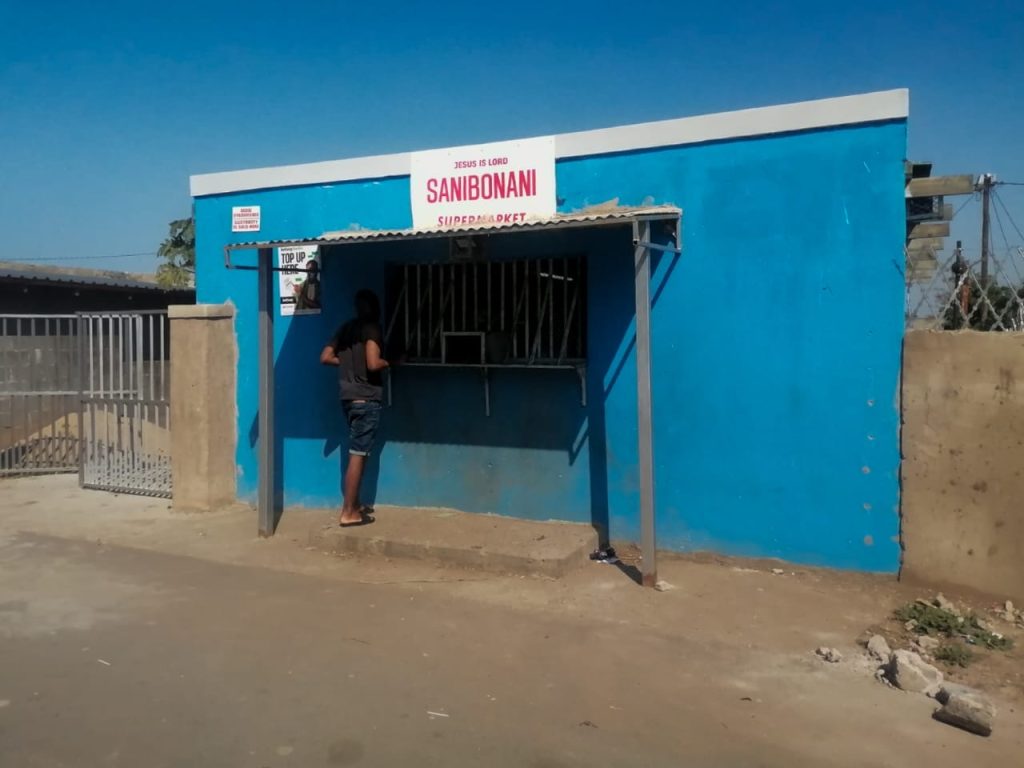
intensifying anti-immigration rhetoric in the KwaZulu-Natal province. Image: Sompisi Ntuli
A Voice For The Voiceless
An organization currently tasked with handling some of the challenges faced by foreigners, or
more specifically, refugees and asylum seekers in Durban, KwaZulu-Natal, is Refugee Social
Services. The Non-Governmental Organisation caters for the needs of these individuals,
which include access to education, healthcare, and psychological support.
The organisation has noted the shift in public perceptions about immigrants and the attitude
towards these individuals.
“The narrative that has been pushed by certain groups has made the attitudes of South
Africans negative towards foreigners in general, and anybody that is perceived to be foreign.
There are people here who are South African, whether they’ve been naturalised or born here,
or haven’t been naturalised but see South Africa as home, and they have also been demonised
on the basis of nationality, their surnames, or physical appearance,” said Yasmin Rajah,
Director of Refugee Social Services.
Rajah also noted that the current discourse around immigration is not new, as is the trend
during any election year. Local Government Elections are due to take place on the 4
th of November 2026.
“We need to understand this issue from the perspective of who the migrant is. There’s more
of us (South Africans) than foreigners in this country, so how do we blame a small minority
for all of the wrong that is in the country? I have noticed that these issues arise every election
year, and has been more formal and organised over the last three or four years. With the use
of social media and misinformation, the pushing of this narrative has become more intense,”
added Rajah.
Policy and policy direction remain critical in the broader debate around immigration and
deciding on who should shoulder the blame, if any, for the alleged immigration crisis in the
most Southern African nation.
“We have had very progressive policies relating to asylum seekers and refugees but over the
last three or four years, the blame has shifted to foreign nationals. Even if you think about
corruption at Home Affairs, corruption doesn’t just happen. It happens through people
working with each other, for instance, how do individuals enter the country illegally if there
isn’t somebody who is helping, closing an eye, or taking a bribe? How does that happen?
Despite these sentiments, the Refugee Social Services (RSS) reiterate their stance against
illegal immigration, and any illegality pertaining to entering South Africa.
“People need to enter the country through the appropriate channels,” emphasised Rajah.
It remains to be seen whether the negative sentiments about immigration will change and if a
common consensus will be reached that will result in harmony between South Africans and
immigrants.
